
North Texas probate and estate attorney meeting with clients about estate matters

PROBATE & ESTATE MATTERS

Guidance Through Probate and Estate Matters in North Texas

Losing a family member can bring difficult legal and practical responsibilities at an already challenging time. Maglisceau & Maglisceau, PLLC helps individuals and families understand the probate and estate administration process, address property and estate-related matters, and determine the appropriate next steps.
UNDERSTANDING THE PROCESS

Probate Can Feel Complicated. Clear Guidance Makes a Difference.

After someone passes away, family members may be faced with questions about a will, property, debts, beneficiaries, court filings, and who has authority to handle the estate.

The appropriate process depends on the circumstances of the estate. Some matters may be relatively straightforward, while others can involve real estate, business interests, unclear documentation, or disagreements that require additional attention.

Maglisceau & Maglisceau works with clients to understand the situation, identify the legal issues involved, and develop a practical path forward.

HOW WE CAN HELP

Probate & Estate Matters We Assist With

  • Probate of Wills

    Guidance through the legal process of presenting a will and addressing the steps required to administer an estate.

  • Estate Administration

    Assistance with the legal responsibilities involved in identifying estate matters, handling assets and obligations, and moving the administration process forward.

  • Executor & Administrator Guidance

    Helping executors and administrators understand their responsibilities and the legal steps involved in managing an estate.

  • Estates Without a Will

    Guidance when a person dies without a valid will and questions arise regarding administration, heirs, property, and the appropriate Texas process.

  • Real Estate & Property Matters

    Assistance when an estate includes a home, land, investment property, or other real estate requiring legal attention during administration.

  • Complex Estate Issues

    Guidance when an estate involves business interests, multiple properties, unclear documentation, or other circumstances that make administration more complicated.

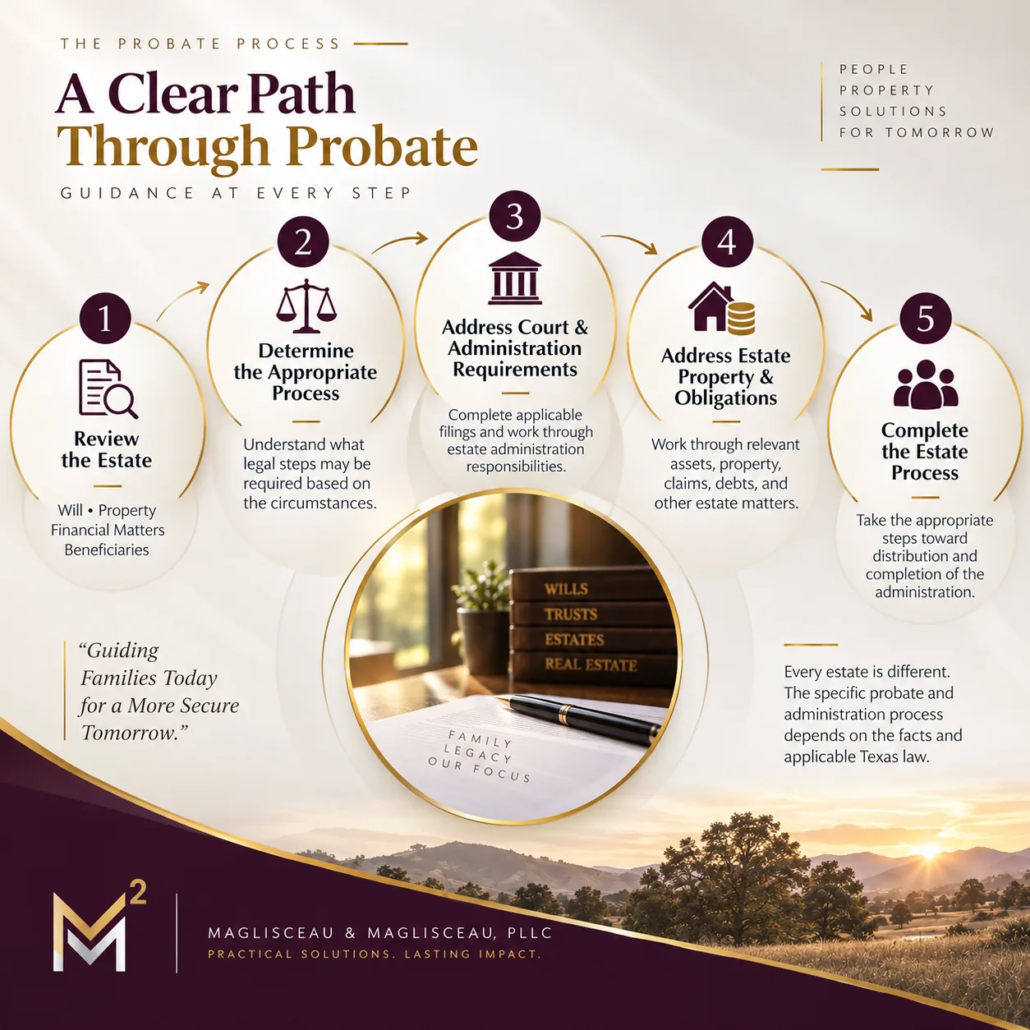
Five-step Texas probate and estate administration process from reviewing the estate through completing administration

FOR EXECUTORS & ADMINISTRATORS

Named as an Executor? You Don’t Have to Navigate the Process Alone.

Being named in a will does not necessarily mean you already know what needs to happen next.

Executors and estate administrators may need to address court requirements, estate property, financial obligations, records, beneficiaries, and other responsibilities while also dealing with the loss of a family member.

Legal guidance can help you understand your role, organize the issues that need attention, and move through the process with greater clarity.

WHEN AN ESTATE INCLUDES REAL ESTATE

Estate Administration Often Involves More Than a Will

For many families, some of the most significant estate assets are real property.

A probate or estate matter may involve a family home, land, rental property, investment property, ownership interests, or property that needs to be addressed before an estate can move forward.

Steve Maglisceau brings extensive real-world real estate experience to matters where estate administration and property issues intersect.

  • Property Ownership

    Understanding how estate-related property is held and what issues may need to be addressed.

  • Real Estate Decisions

    Working through legal considerations involving estate property as part of the broader administration process.

  • Complex Property Interests

    Addressing situations involving multiple properties, business interests, or other real-world ownership considerations.

WHEN TO SEEK GUIDANCE

You May Want Legal Guidance If…

☑ A family member has passed away and left a will.
☑ You have been named executor and are unsure what to do next.
☑ There is no will and you need to understand the available process.
☑ The estate includes a home, land, rental property, or other real estate.
☑ There are questions about estate administration or beneficiaries.
☑ The estate includes business or ownership interests.
☑ You are unsure whether probate is necessary.
☑ The estate appears more complicated than expected.
You do not need to have every document or answer before contacting the firm. An initial discussion can help identify the issues involved and the appropriate next steps.

SERVING NORTH TEXAS

Probate & Estate Guidance for North Texas Families

Maglisceau & Maglisceau, PLLC serves clients with probate and estate matters in North Texas, with particular focus on Cooke County and Grayson County.

Depending on the matter, the firm also serves clients across other parts of the North Texas region.

  • Cooke County

    PRIMARY

  • Grayson County

    PRIMARY

A PRACTICAL APPROACH

Legal Guidance Built Around the Estate in Front of You

Probate and estate matters are not identical from one family to another. The property involved, available documents, family circumstances, and other legal considerations can all affect what comes next.

Maglisceau & Maglisceau begins by understanding the situation before developing a path forward.

01
Listen
Understand what has happened and what concerns you have.

02
Review
Look at the available estate documents, property, and relevant circumstances.

03
Develop a Path Forward
Identify the legal process and practical next steps appropriate to the matter.

04
Move Through the Process

Provide guidance as the estate matter progresses.

PROBATE & ESTATE FAQs

Common Questions About Probate in Texas

Probate is a legal process that may be used after a person’s death to address a will, appoint or recognize the appropriate person to administer the estate, and handle other matters involving the estate under Texas law.

Not necessarily. The appropriate process depends on factors such as the assets involved, how property is owned, whether there is a valid will, and other circumstances. An attorney can review the situation and help determine what process may apply.

When a person dies without a valid will, Texas law can determine how estate property passes. The appropriate administration process depends on the specific circumstances of the estate and potential heirs.

An executor may have responsibilities involving estate administration, property, records, obligations, beneficiaries, and court requirements. The exact responsibilities depend on the estate and the applicable legal process.

There is no single timeline for every estate. The length of the process can depend on the estate’s complexity, property involved, required court procedures, unresolved issues, and other circumstances.

Real property can create additional considerations during estate administration, including ownership, documentation, and decisions concerning the property. Legal and real estate issues may need to be considered together.

If you are responsible for an estate, have questions about a will or estate property, are unsure whether probate is required, or do not know what steps to take after a death, speaking with an attorney can help clarify the available options and next steps.